Propeller Testing Rig
Some annoying guy once told me I needed to find the correct motor, propeller and battery for a drone that can lift 4kg. We had a slight dispute about whether it was 2kg or 4kg which I'm not sure is even resolved to this day. Anyway, there seems to be almost infinite combinations of propellers, motors and batteries and no easy way to calculate what components are needed for a given amount of thrust. So I left the rest of the team to argue about that for a bit, and that bought me some time to do some evil scheming.
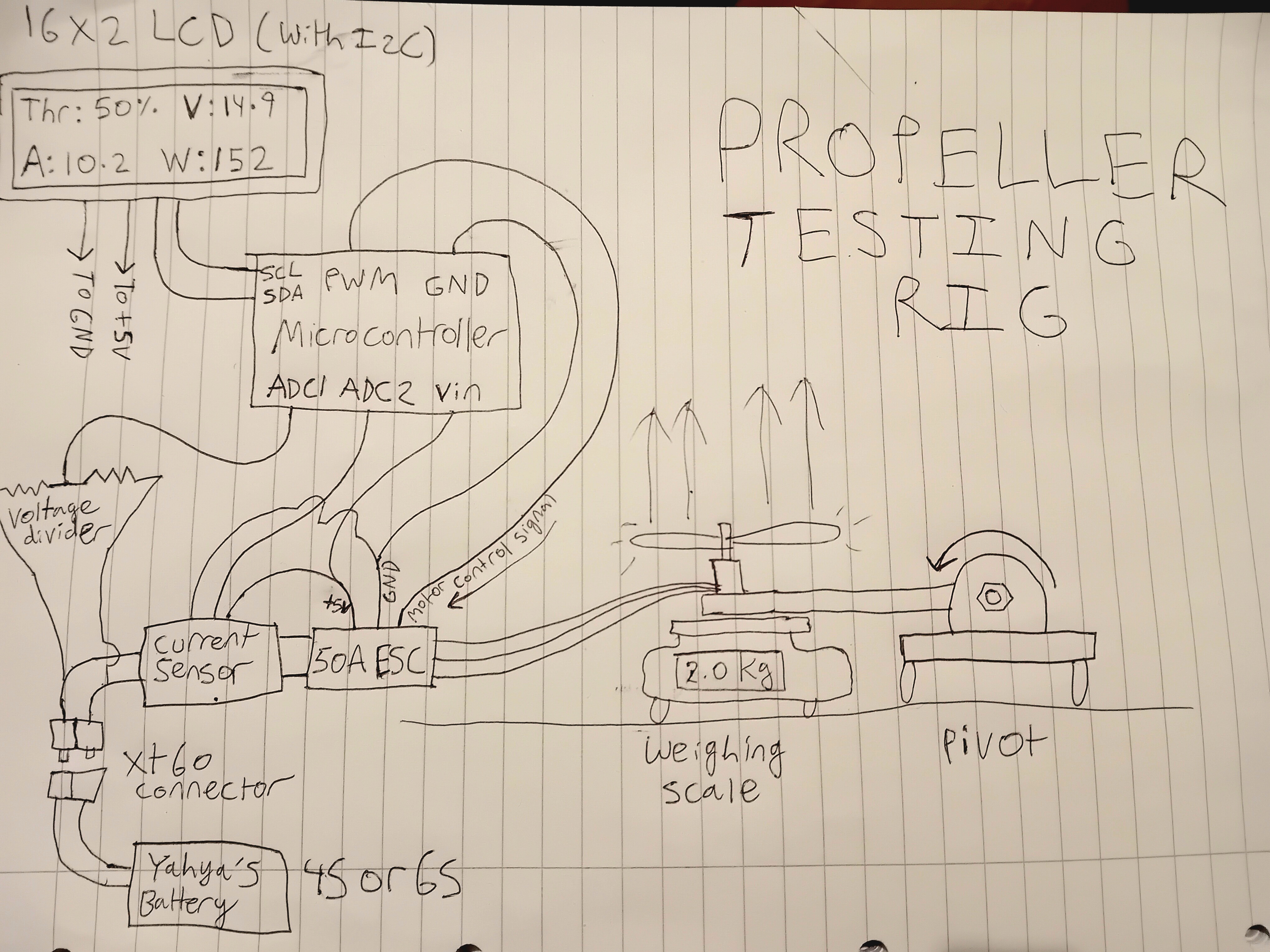
I we could just measure the actual thrust generated and power used and then divide the thrust by the power we get efficiency in grams/watt which means we can reliably compare component choices with real world data. When I showed my schematic to people I don't think they took me seriously. But I was dead serious. And I actually built it.
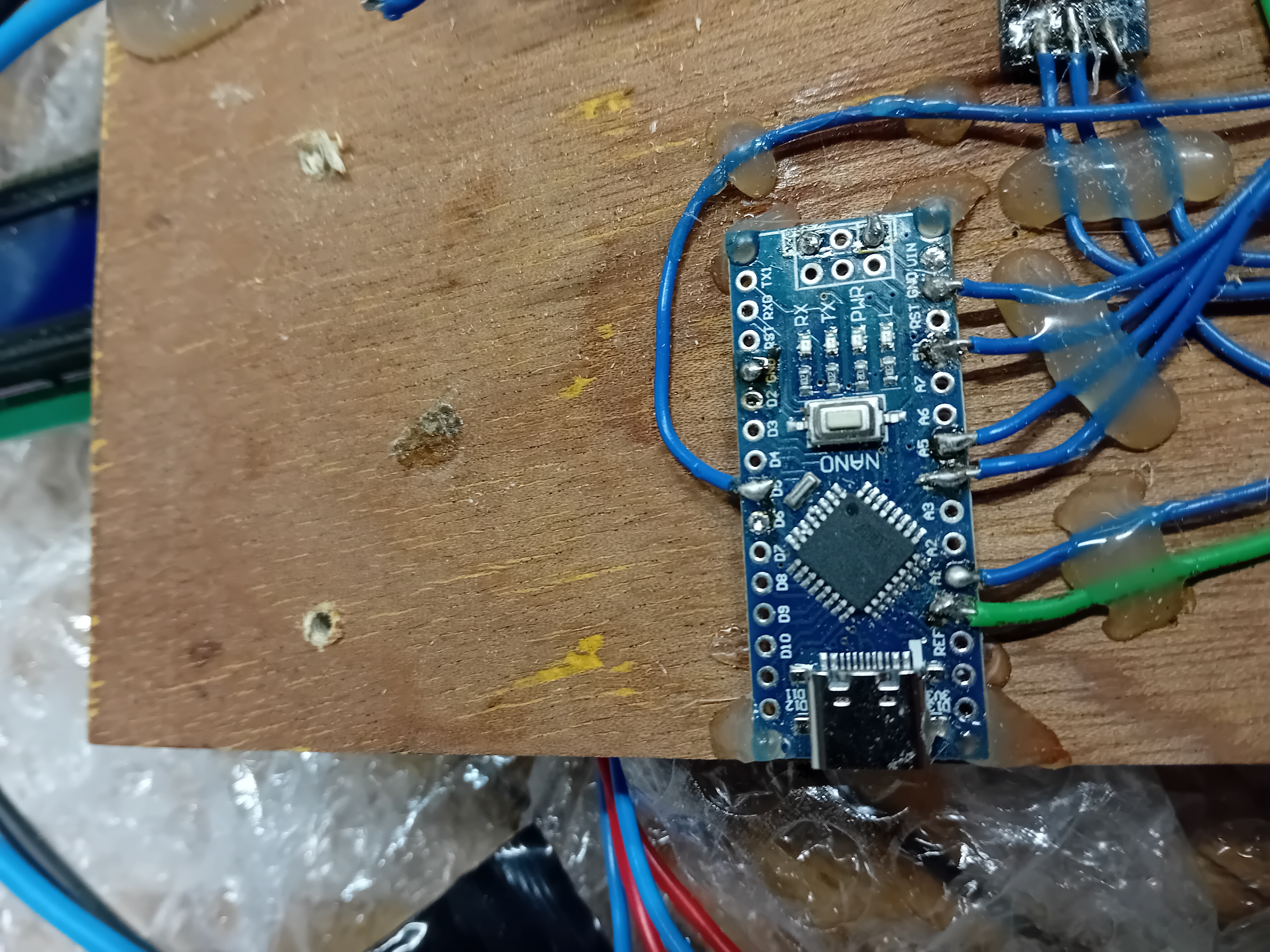
I decided to start with an Arduino nano - a bit clunky and old school but perfect for this application because the ADCs aren't extremely shit. This means it can measure voltages and analog current sensors with a decent accuracy and therefore I don't have to justify buying more bits.
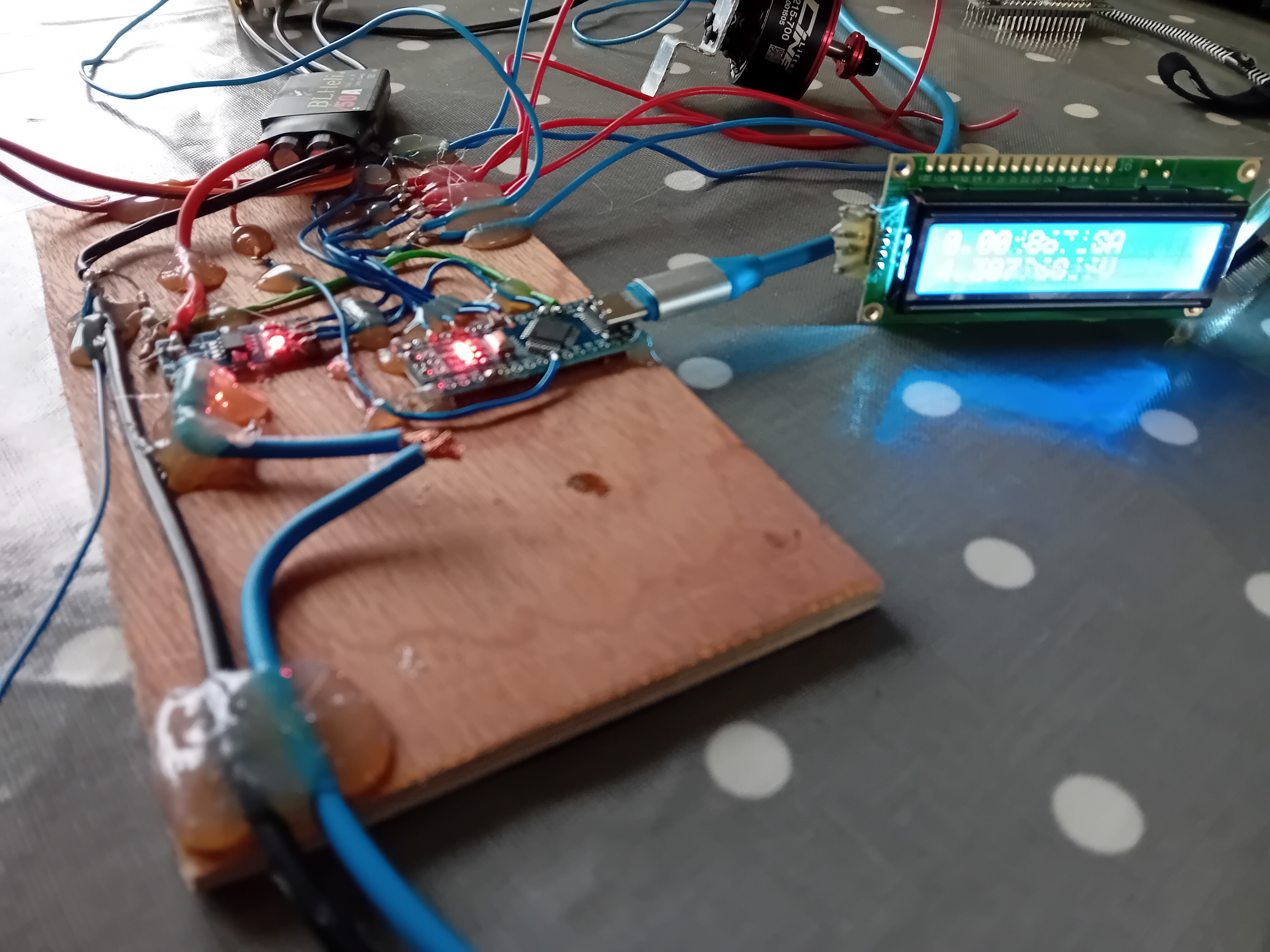
The project is now emerging from the pile of bits. Most importantly we need an ESC in order to control any powerful 3 phase drone motor.
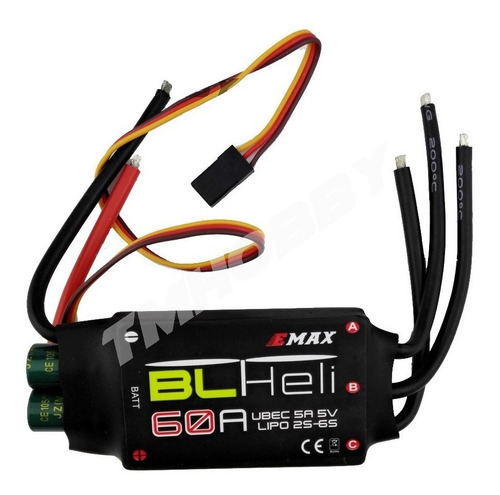
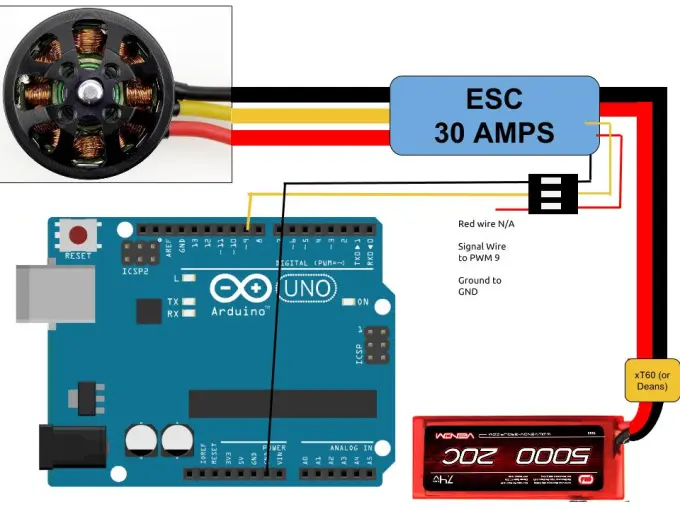
This is the basic ESC wiring we will be using to control the motor. It's not shown here but the ESC conveniently outputs a stable 5 volt supply through the little red wire which can be used to power our other little components such as arduino and lcd screen.
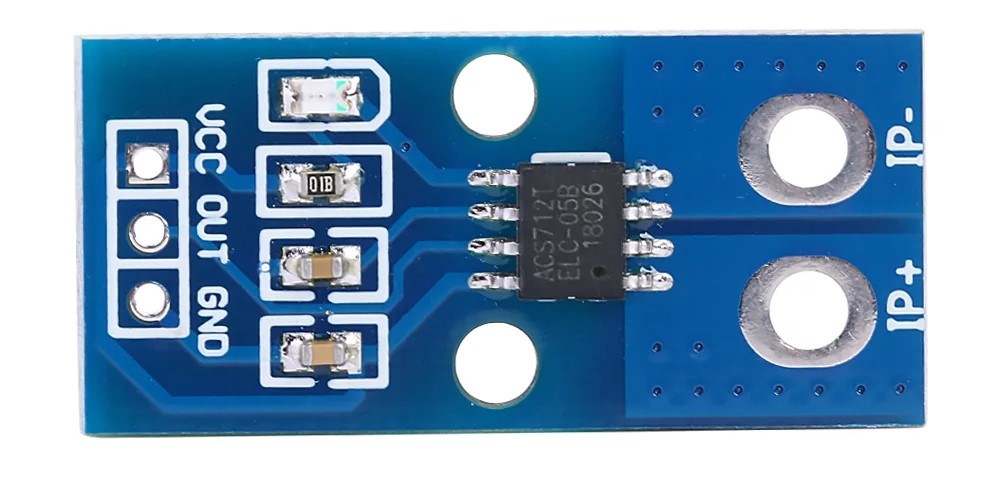
To calculate the power being used we need to know the current and the voltage. This hall effect current sensor means I can measure huge currents up to 50 amps I think.
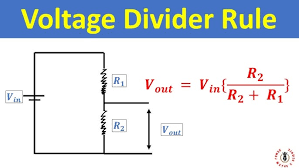
To measure voltage, we can use a voltage divider to scale the battery voltage down to a value that wont destroy the Arduino ADC.
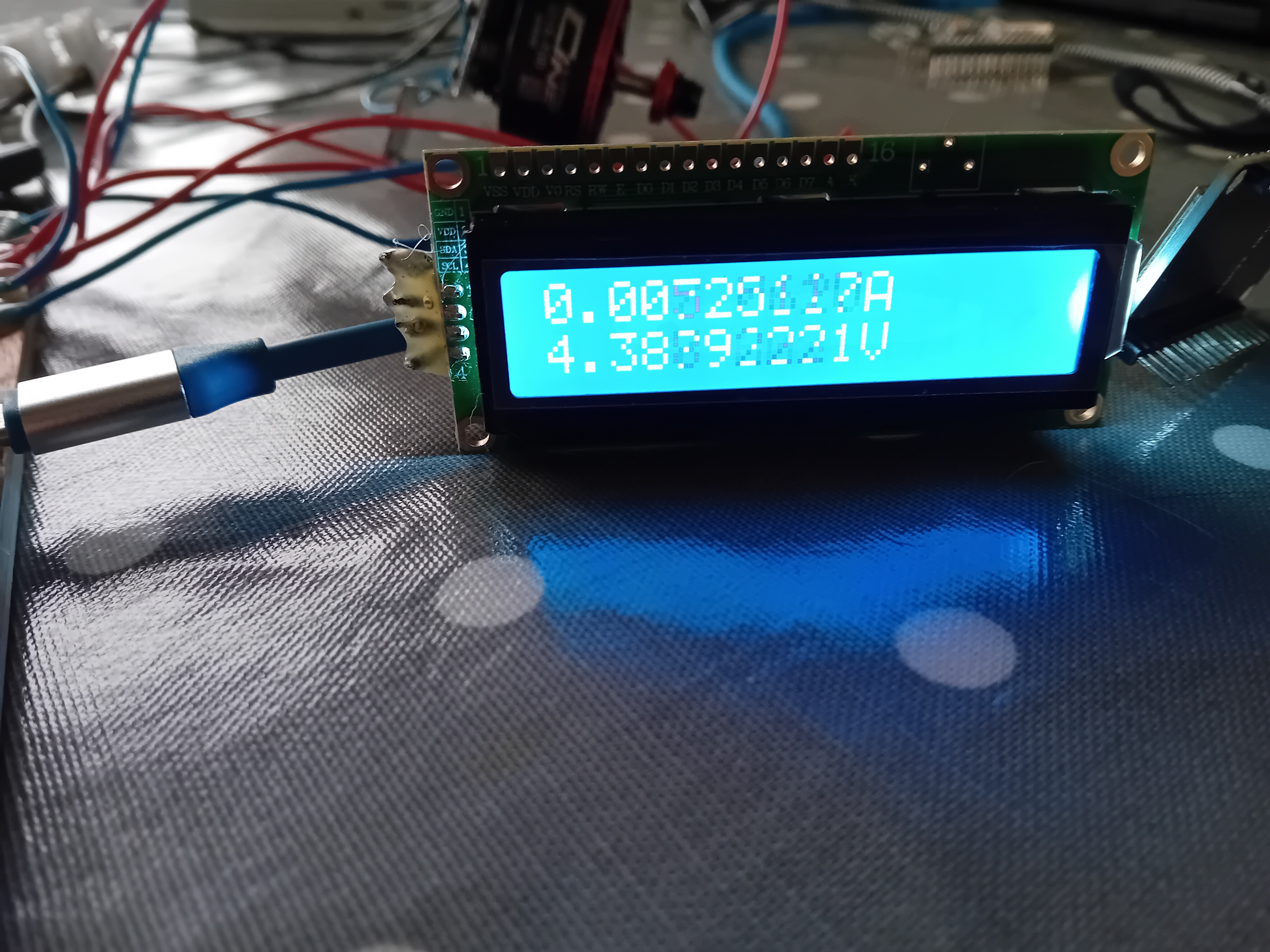
Here it is measuring current and voltage and displaying the values on the screen. But what about the thrust? wouldn't it be nice to be able to measure the thrust automatically without having to stare at a weighing scale and risk my head being skewered by shattered fibreglass propeller shrapnel.
I set to work and found this wonderful piece of kit:
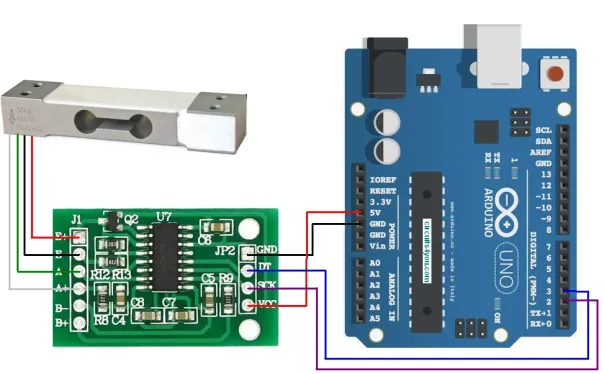
This is the HX711, a load cell measury thing that can output a force from a load cell in kilograms. If I could just bolt the motor and propeller onto the end of this thing then everything would be solved...
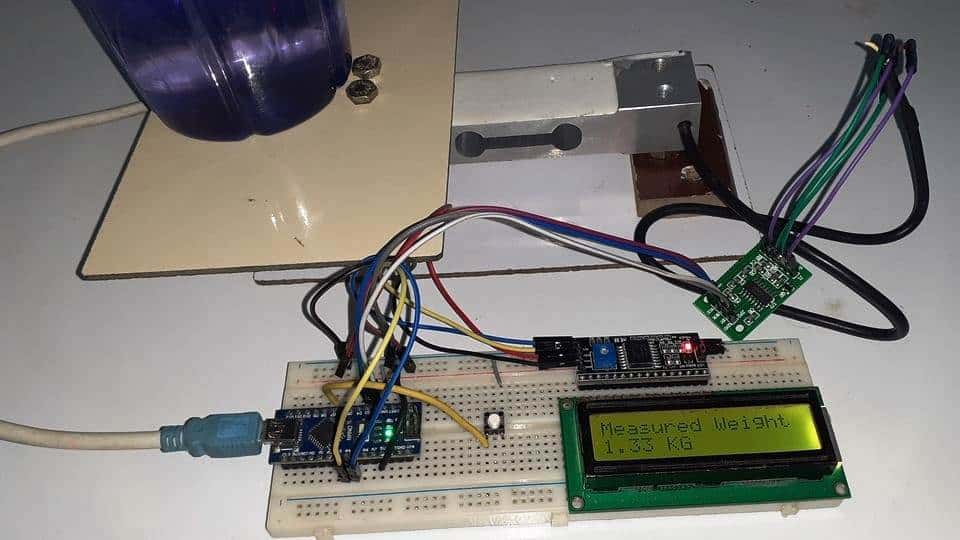
This picture isn't my project, but it's the general idea of this certain part of my project.
I then managed to devise a 3d printed system to bolt it all together. yes it does look like some sort of upside down pink toilet but that's beside the point.
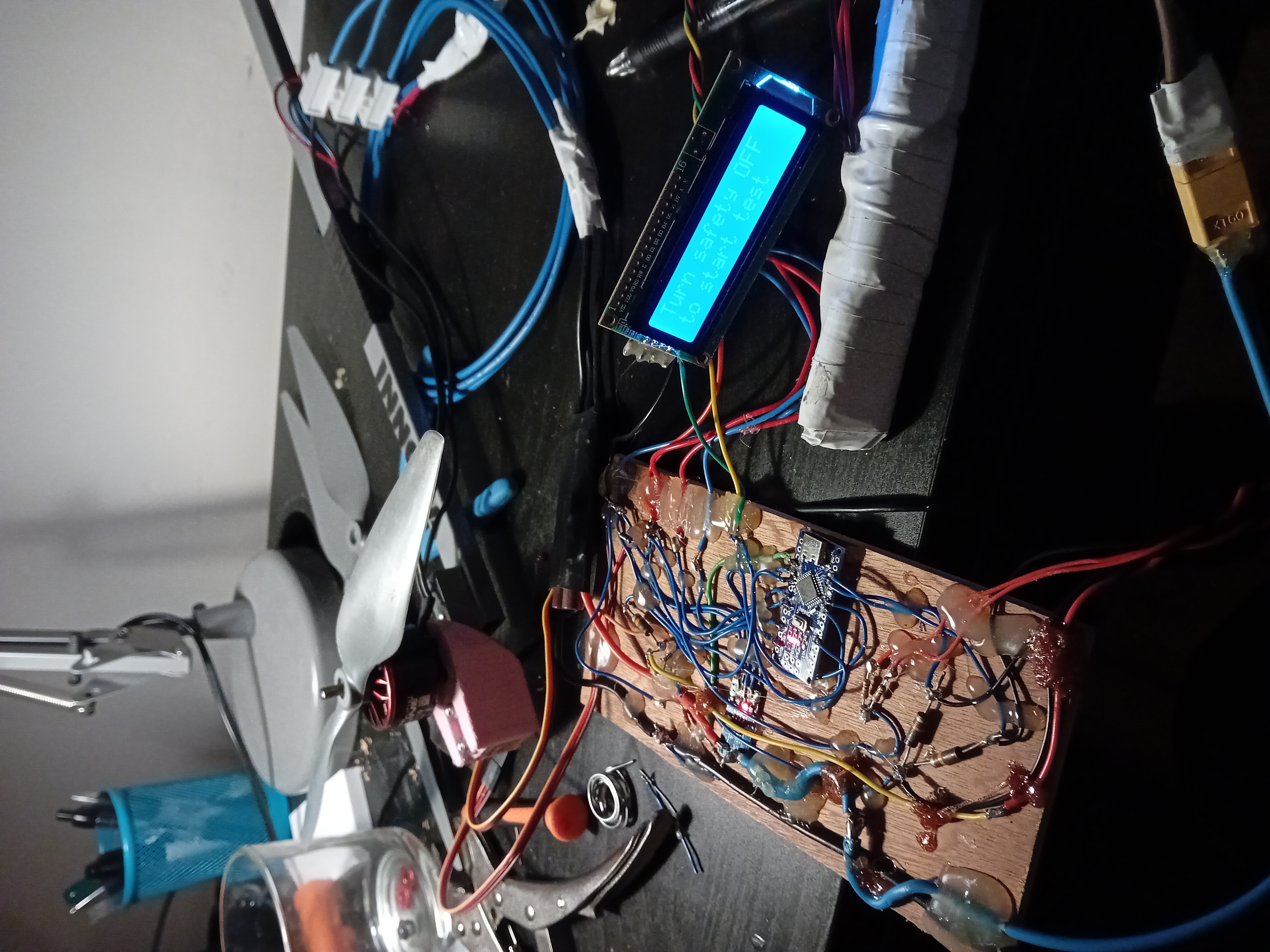
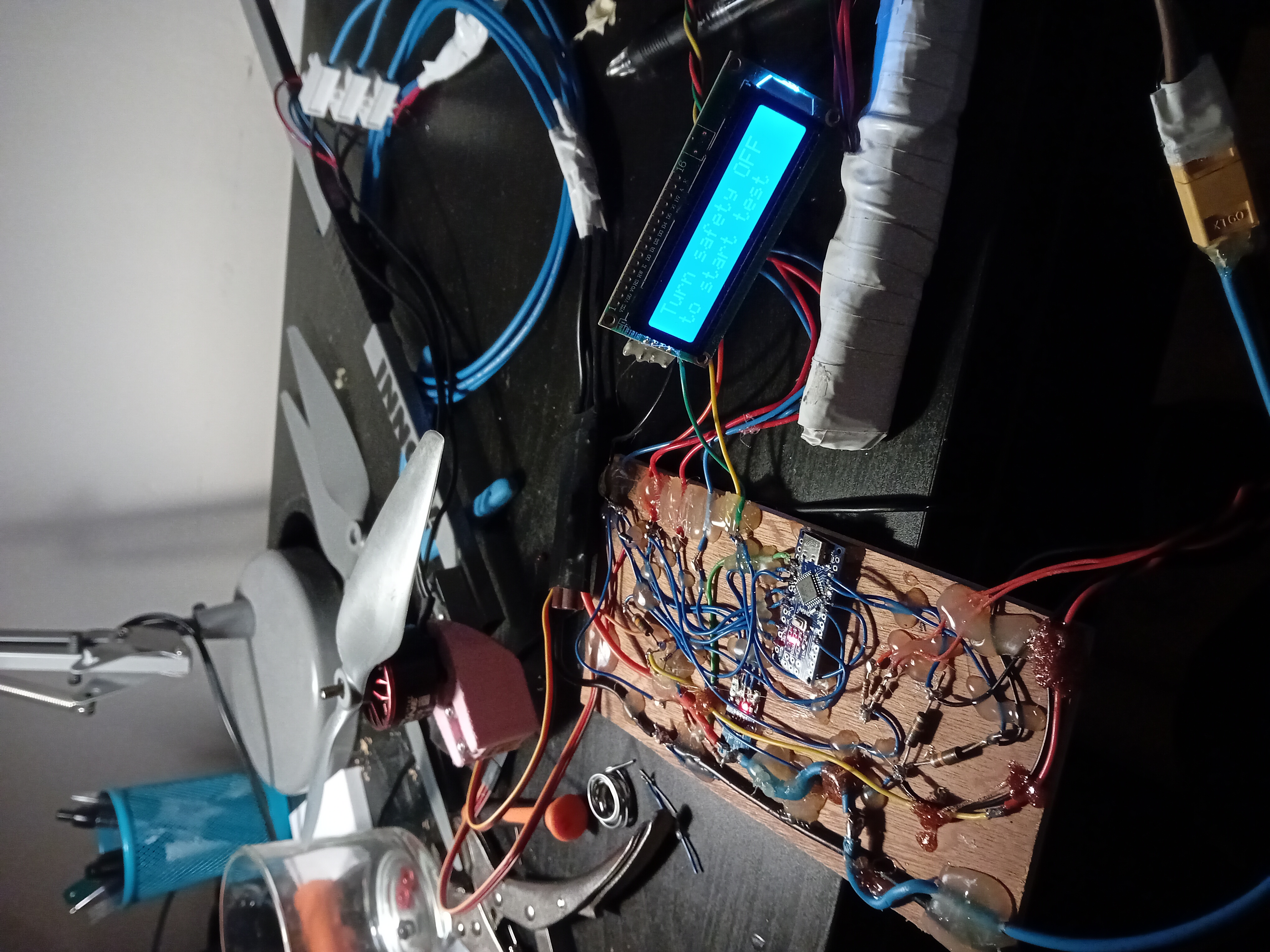
This powerhouse of electrical engineering genius is finally finished. As you can see, I added some exciting twists and turns in case the electrons get bored. The battery is made out of 9 vapes and the various components anchored firmly in place by sparkling glittery hot glue. I also convinced a girl to steal me those three juicy looking 10k resistors from the national physics laboratory, but that's another story. The aim is to fill the viewer with the sense of wonder because they have no idea what any of this beautiful snaking tangled mess of wires does, and yet it works (almost) flawlessly, a marvel beyond their comprehension. A work of art. Not even I can remember what most of the wires do. But most importantly, along the way I have mastered a style of wiring that expresses my true apathy towards this universe.
A routine test. You can hear the throttle spazzes out a bit which means I have to do about 5 repeats of each test and take out any crazy outliers to make sure the data is accurate. The furniture is huddled around just in case all shit breaks loose and a propeller shatters. I am not too concerned about the prop flying off cause its blowing air upwards not downwards, but still I have triple checked the bolt is tight. Blowing up makes it more accurate because sucking is less affected by obstacles than blowing is.